
Learn where Egypt’s White Desert is, what an overnight camp involves, what to pack and how it differs from the Sinai desert safaris offered from Sharm El Sheikh.
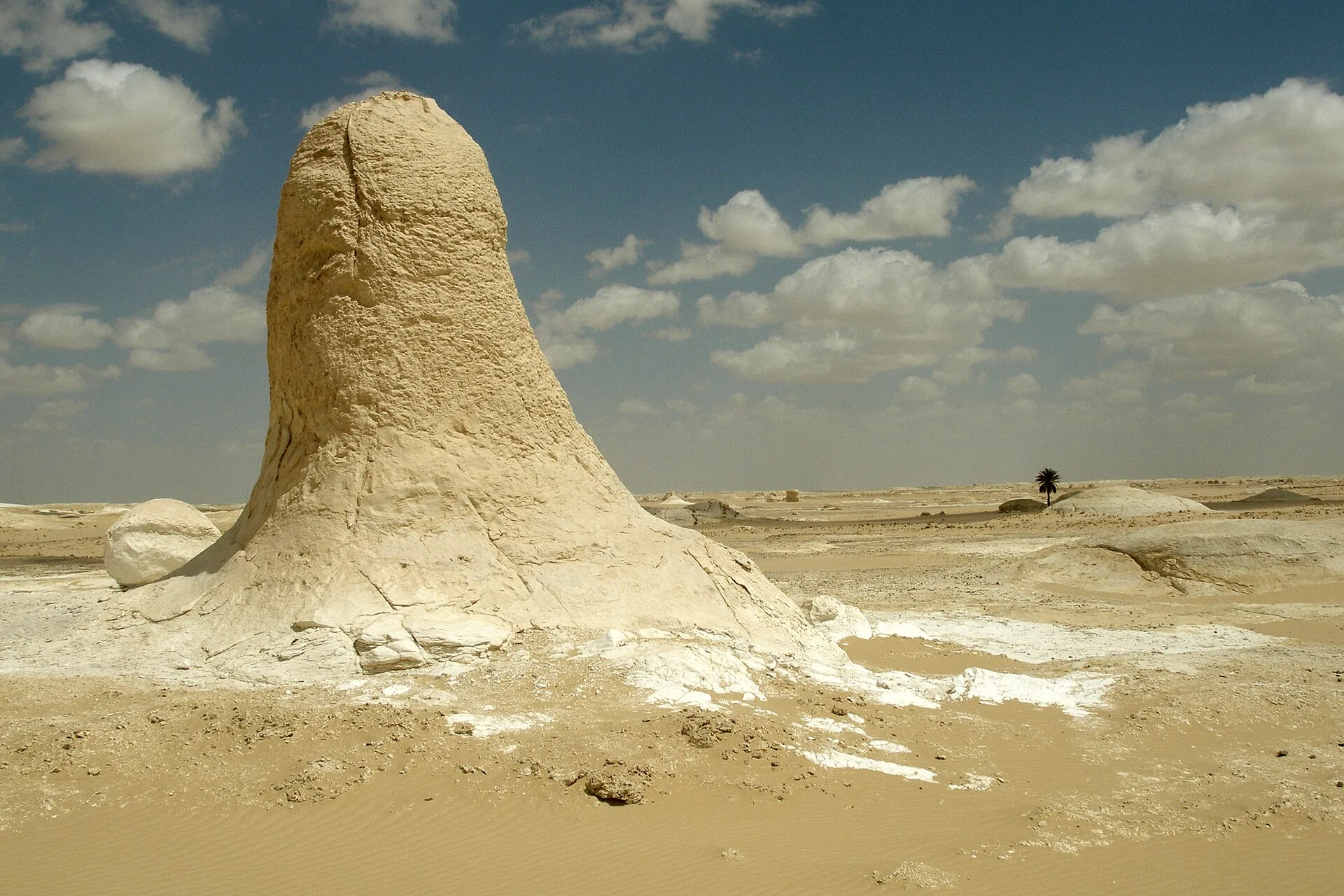
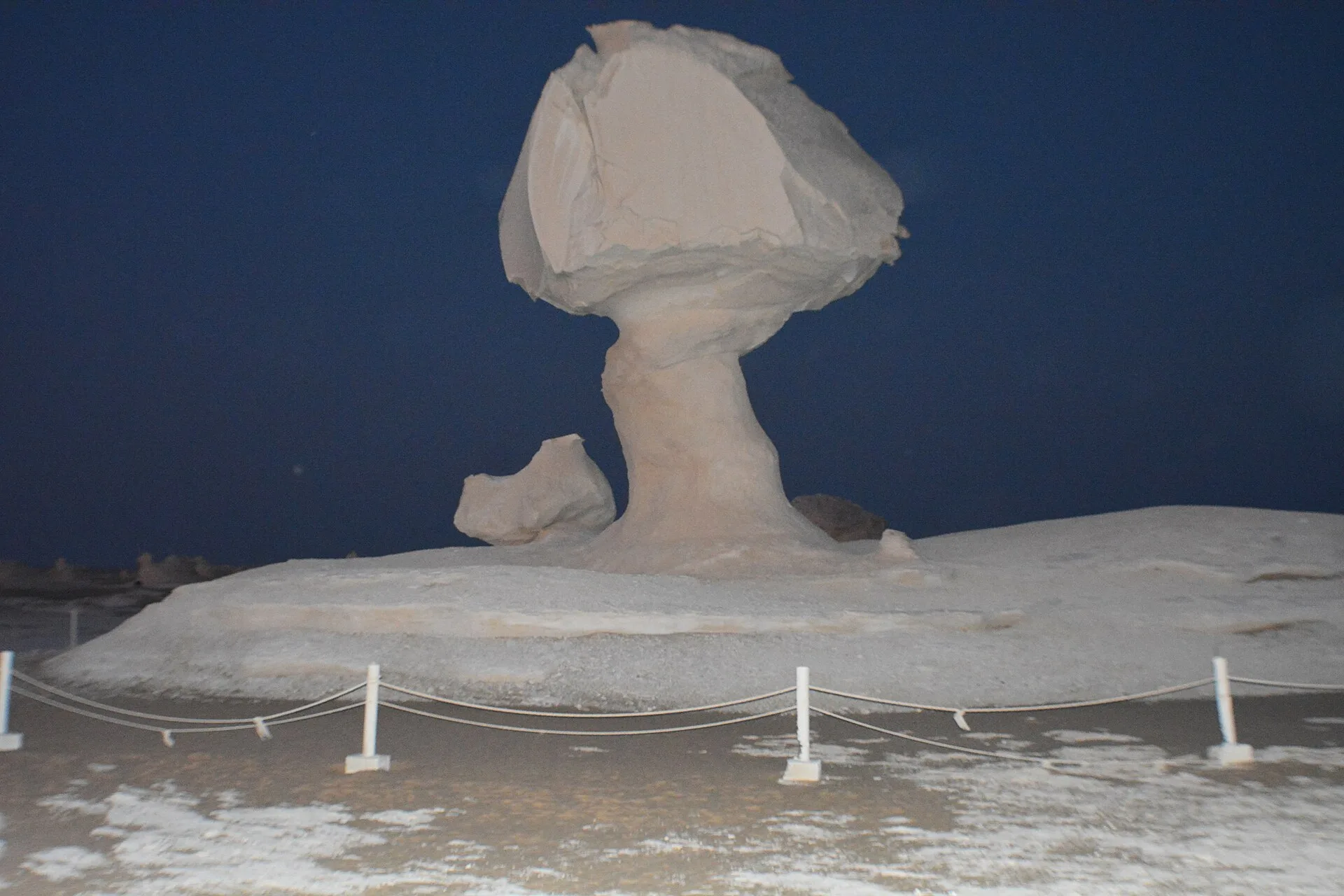
Egypt's White Desert is not a field of ordinary sand dunes. It is a protected landscape in the New Valley Governorate where wind erosion has shaped bright chalk and limestone into towers, rounded forms and the famous “mushroom” rocks. An overnight visit adds sunset, a simple desert camp and sunrise, but it also requires a licensed local operator, a suitable four-wheel-drive vehicle and realistic expectations about comfort.
Header image: chalk and limestone formations in Egypt's White Desert. Photo by Vyacheslav Argenberg, CC BY 4.0.
Where is the White Desert in Egypt?
The White Desert Protected Area lies in Egypt's Western Desert, in the New Valley Governorate, around the Farafra depression and south of Bahariya Oasis. Egypt's Environmental Affairs Agency lists it as a 3,133.5-square-kilometre protected landscape, declared in 2002, approximately 570 kilometres from Cairo. Its official description highlights white chalk ground, steep hills, fossils and formations carved by wind.
This matters for planning: the White Desert is not beside Sharm El Sheikh and it is not part of the Sinai Peninsula. Most short itineraries approach through Bahariya and require a long road journey from Cairo before the off-road section begins. Treat it as a dedicated two-day journey at minimum, not an add-on to a normal Cairo sightseeing day.
What an overnight White Desert trip usually includes
Details vary by operator, but a typical itinerary starts with a road transfer to the oasis, then changes to a four-wheel-drive vehicle with a local desert team. The route may include parts of the Black Desert and other geological stops before entering the protected White Desert landscape. Camp is established before or around sunset, followed by dinner, tea and an early start for sunrise.
Always ask for the exact route rather than relying on a generic “desert safari” label. Confirm who provides the vehicle, whether protected-area permissions and fees are included, what sleeping equipment is supplied, how drinking water is carried and what toilet arrangements are available.
What the camp is really like
White Desert camping is usually basic. Expect a sleeping bag or blankets, mats and either a simple tent or open-air arrangement according to the operator and conditions. There are no hotel facilities at a remote camp. Privacy, washing water, mobile coverage and power can all be limited or absent.
That simplicity is part of the appeal, but it should never be a surprise. Ask the organiser whether the tent is private or shared, whether bedding is freshly supplied, and how dietary needs are handled. Families should discuss ages, car-seat needs and the length of the drives before confirming.
What to pack for a night in the White Desert
- Warm layers: desert temperatures can fall sharply after sunset, even when the afternoon is hot.
- Closed shoes: choose footwear suitable for uneven chalk, gravel and sand.
- Sun protection: bring a hat, sunglasses, sunscreen and long, breathable clothing.
- Personal essentials: carry medication, tissues, hand sanitiser and a small wash kit.
- Light: a head torch is more useful than a phone when both hands are needed.
- Power: take a charged power bank; do not expect electricity at camp.
- Reusable bottle: verify that the operator carries enough drinking water for the full route.
- Small waste bag: everything brought into the desert should leave with the group.
Sunset, stars and sunrise without the marketing fiction
The landscape changes quickly near sunset as the pale formations reflect warmer light. After dark, low artificial light can make the sky appear much clearer than it does in a city. Visibility still depends on the moon, cloud, dust and the exact camp location; no responsible operator can guarantee a particular photograph or a completely dark sky.
Nighttime is colder and quieter than many first-time visitors expect. Stay within the area set by the guide, use a head torch when walking and never climb formations in darkness. Sunrise comes early, so place warm clothes, shoes and camera equipment where they can be found without unpacking the whole camp.
How to choose a responsible operator
- Use an established company working with local licensed drivers and guides.
- Ask whether protected-area entry and camping permissions are included.
- Confirm the vehicle type, passenger count, seat belts and emergency communication plan.
- Request a written list of meals, water, bedding and toilet arrangements.
- Avoid operators that drive over fragile formations, feed wildlife or leave rubbish behind.
- Check the cancellation policy for unsafe weather or official access restrictions.
Protecting the White Desert
The chalk sculptures are geology, not playground equipment. Do not climb, carve names, break pieces or collect fossils and rocks. Keep vehicles on authorised routes, use established camp areas and carry all waste out. Food scraps should not be left for wildlife. The Environmental Affairs Agency publishes protected-area information and current visitor-fee rules; your operator should follow the applicable requirements.
Best time to plan an overnight trip
Cooler months are generally more comfortable for Western Desert travel, while summer brings intense daytime heat. Conditions still vary, and wind or dust can affect the route at any time. Check the forecast and official access position shortly before departure, and allow enough flexibility for the local guide to adjust the camp or route for safety.
White Desert versus a Sinai safari from Sharm El Sheikh
These are different experiences in different regions. Grand Tours' current desert excursions from Sharm El Sheikh explore Sinai rather than the White Desert. The Sinai Desert Safari is a practical choice for travellers who want a desert day during a Sharm holiday, while the Mount Sinai sunrise trip focuses on an overnight mountain journey and early-morning views.
If the White Desert itself is your goal, build it into a Cairo and Western Desert itinerary with a specialist local operator. You can still use a Cairo by air excursion from Sharm El Sheikh for Cairo's monuments, but it does not include the White Desert and should not be presented as a connection to an overnight camp.